
User search behavior is undergoing its biggest transformation in two decades. Today, people discover information not only through traditional 10-blue-link search engines, but also via AI-generated Overviews, voice assistants, and conversational search platforms like ChatGPT Search, Claude, and Perplexity.
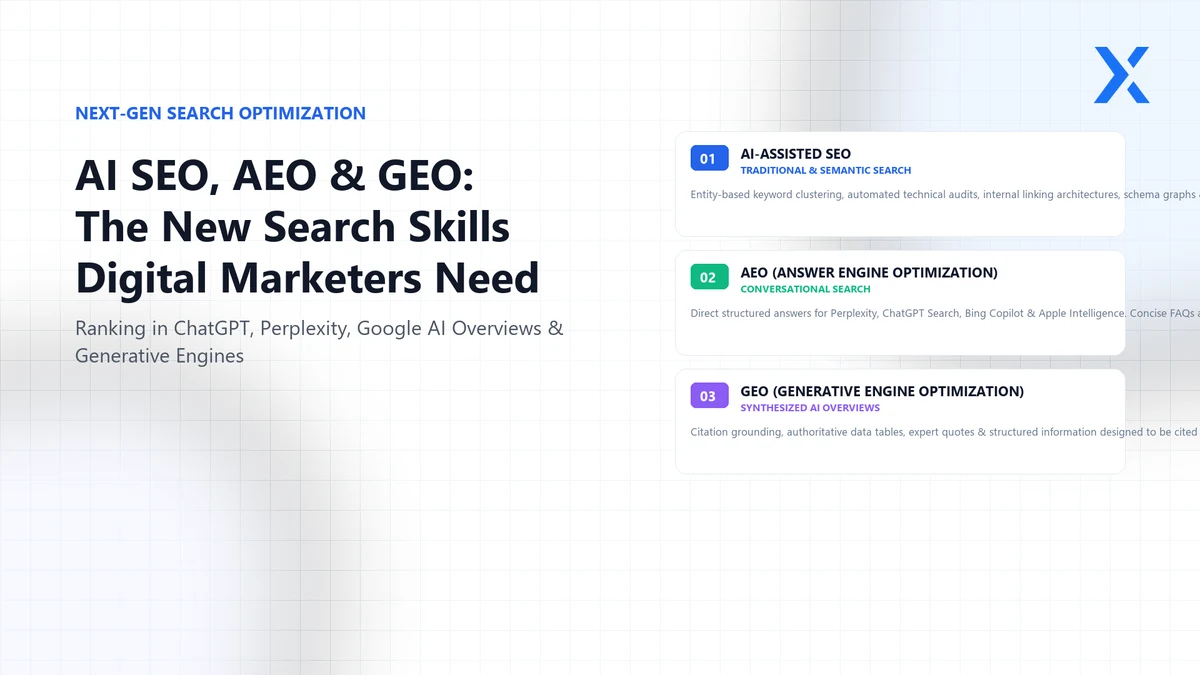
Modern digital marketers must master three converging disciplines: Search Engine Optimization (SEO), Answer Engine Optimization (AEO), and Generative Engine Optimization (GEO). While all three share the ultimate goal of maximizing brand visibility, their tactical execution, target platforms, and measurement frameworks differ significantly.
What Is SEO?
Search Engine Optimization focuses on helping web pages rank prominently in conventional organic search engine results pages (SERPs).
Core SEO practices include keyword research, search intent mapping, crawl accessibility, page speed optimization, internal linking, structured data markup, and link acquisition. AI platforms (such as ChatGPT, Semrush, and SurferSEO) accelerate competitor keyword audits and content briefs, but human marketers must still craft compelling, authoritative content that provides superior user value.
What Is Answer Engine Optimisation (AEO)?
Answer Engine Optimization focuses on structuring information so answer-focused systems (such as Google Featured Snippets, voice assistants, and knowledge panels) can extract direct, concise answers to user queries.
Practical approaches for AEO include:
- Providing clear, direct 40–60 word answer summaries immediately under descriptive headings.
- Using semantic heading hierarchies (H2, H3) that mirror exact user search questions.
- Structuring comparative information into tables, bulleted lists, and step-by-step ordered lists.
- Maintaining absolute factual accuracy and supporting assertions with verified statistics.
- Adding helpful, conversational FAQ sections that directly resolve user queries.
Real-World Example: A local bakery added a clean Q&A block detailing operating hours, custom cake lead times, and allergy options. Within weeks, their weekend hours and ordering rules captured Google featured snippets, driving a 30% surge in qualified foot traffic without additional ad spend.
What Is Generative Engine Optimisation (GEO)?
Generative Engine Optimization is an emerging discipline aimed at increasing the likelihood that your brand, products, or insights are synthesized and cited inside AI-generated answers (such as Google AI Overviews, Perplexity citations, and ChatGPT answers).
Key practices for GEO include publishing primary research data, demonstrating first-hand topical authority (E-E-A-T), maintaining consistent entity facts across trusted knowledge bases (Wikidata, industry publications, directories), and articulating nuanced, authoritative opinions that large language models cite as authoritative references.
How Do SEO, AEO and GEO Work Together?
Consider an institute publishing a guide on choosing an AI marketing program:
- SEO ensures the page targets relevant search intent, loads fast, and maintains flawless technical indexing.
- AEO structures clear answer boxes for queries like "how long does an AI digital marketing course take?" and "what are the average fees?" to capture snippets.
- GEO provides original insights, curriculum comparison tables, and verified alumni data that AI models cite when users ask ChatGPT, "Which are the most reputable AI marketing courses in India?"
A single well-crafted article achieves all three objectives simultaneously by prioritizing genuine user utility over superficial keyword stuffing.
Technical Foundations Still Matter
Advanced AI optimization cannot compensate for broken technical foundations. Clean HTML rendering, valid canonical tags, server response times under 200ms, and structured Schema.org JSON-LD markup remain foundational.
Schema markup helps search bots disambiguate entities, authors, and organization credentials. Ensure on-page JSON-LD schemas mirror visible content accurately without misleading claims.
How Can You Measure Performance?
Track traditional organic clicks, impressions, and query rankings using Google Search Console. In GA4, monitor referral traffic from AI platforms (like chatgpt.com or perplexity.ai) and observe how engagement metrics compare to organic search traffic.
Set up brand mention alerts across digital PR channels to observe how frequently your brand is referenced in AI syntheses. Because generative search analytics are evolving quickly, measure business outcomes (such as leads and sales) rather than vanity mentions alone.
Learn Modern Search Optimisation
Building expertise across SEO, AEO, and GEO requires a structured blend of technical know-how, content architecture, and AI tooling.
To explore how leading training programs integrate AI SEO, Answer Engine Optimization, and GEO into practical curriculums, see our complete guide on AI digital marketing courses in Bangalore.
Conclusion
SEO, AEO, and GEO are not mutually exclusive tactics—they are complementary dimensions of modern search visibility. Focus on authentic user value, solid technical foundations, and credible expertise to ensure your content thrives across traditional and AI-driven search engines alike.
Master AI Search & GEO Strategies
Learn to optimize for Google AI Overviews, Perplexity, and traditional search with AcceleratorX's live 16-week AI Digital Marketing Program.